Laboratory documentation · Munich

Get in contact with us

info@newsol.ai
NewSol

Capture the work.
Skip the paperwork.

Multimodal AI that captures and protocols laboratory work as it happens.

Hours lost every day

31.2% of total operational lab time goes into manual documentation and digitization.1

  1. Inaccurate, error prone capture
  2. Written from memory
  3. Lack of traceability
  4. Non-standardized

1 SLAS Technology, 2025 · McKinsey & Company, 2021

14.4% Manual documentation at the bench

16.8% Re-typing into spreadsheets

One dot is 0.1% of operational lab time

Capture at the source

NewSol listens and watches as the work happens, documenting the protocol in real time.

Where what the camera saw and what was said differ,

you choose which one is right.
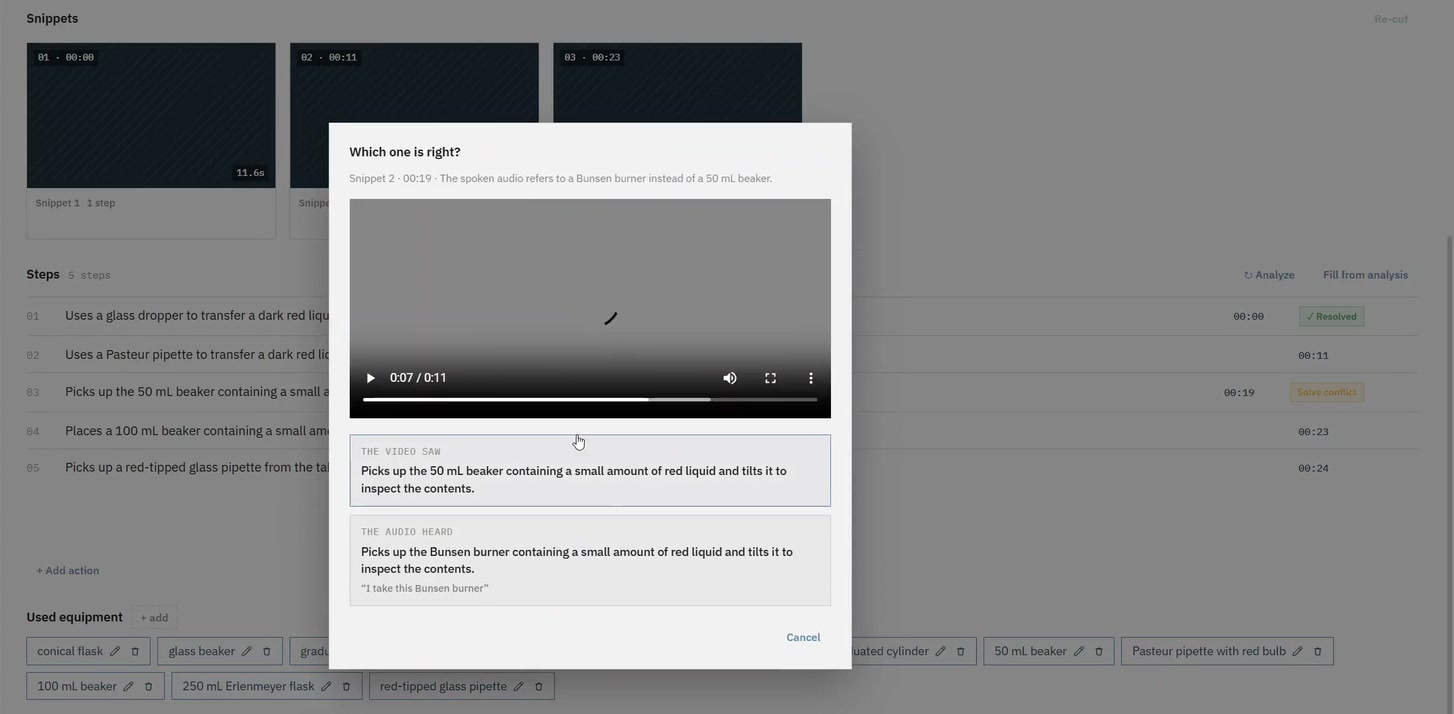
NewSol dialog titled Which one is right: the step the video saw next to the step the audio heard, for the reviewer to choose.

Voice

Spoken steps become a structured record, completely hands-free.

+ Vision

The camera recognises devices, reagents, labware and workflow steps.

+ AI

Fuses both modalities into a complete, ready-to-sign document.

Complete, GLP-ready documentation

How it works

From work steps to signed protocol

  1. Capture

    A clip-on camera captures audio and video.
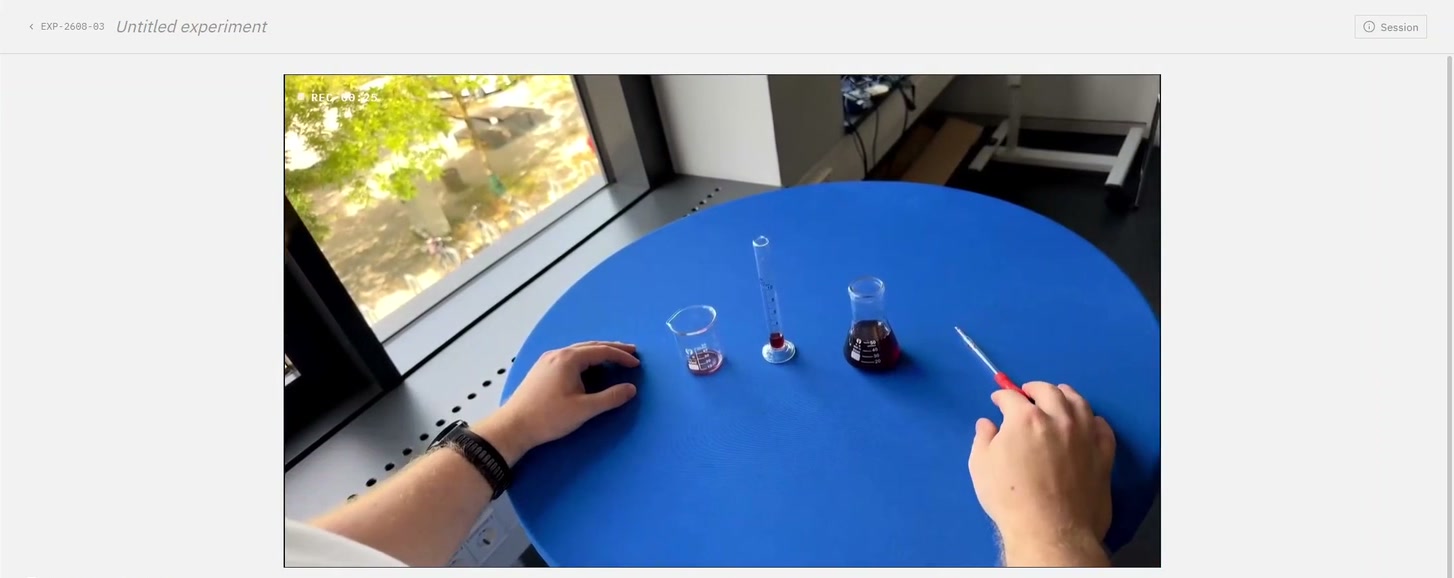
    NewSol session view during a live capture: the bench camera shows glassware and the experimenter's hands.
  2. Understand

    Speech recognition, object detection and a lab-domain context.
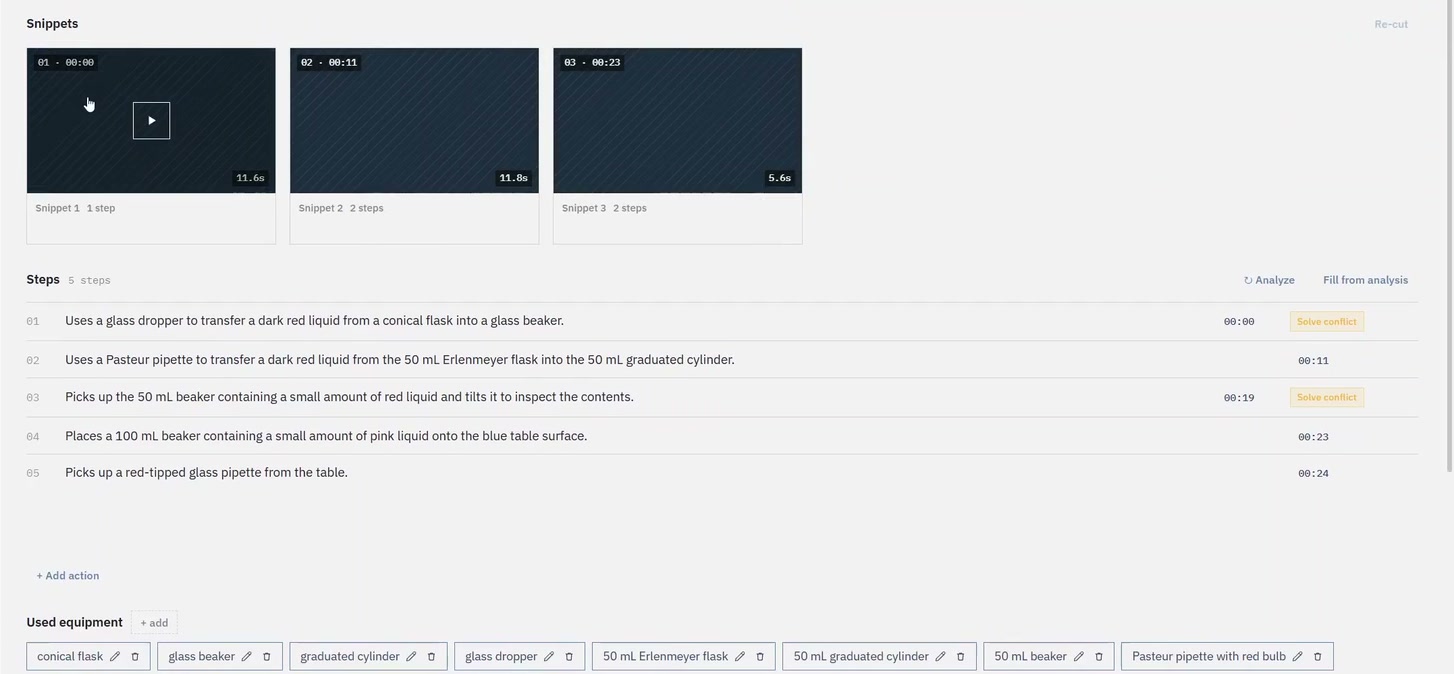
    NewSol session view after the capture: three video snippets, five detected protocol steps with timestamps and the list of used equipment.
  3. Summarize

    The output is summarized for each step and experiment.
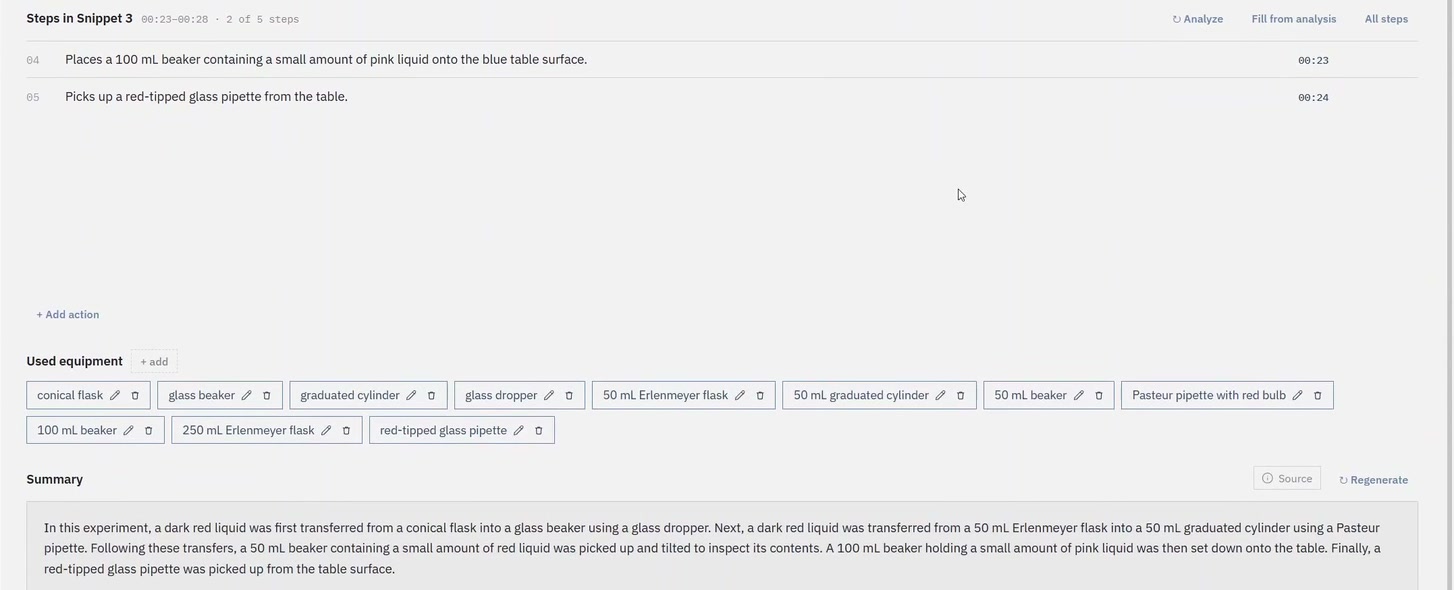
    NewSol session view showing the steps of one snippet, the used equipment and a written summary of the experiment.
  4. Confirm & export

    You review, sign, and push it into your ELN in one click.
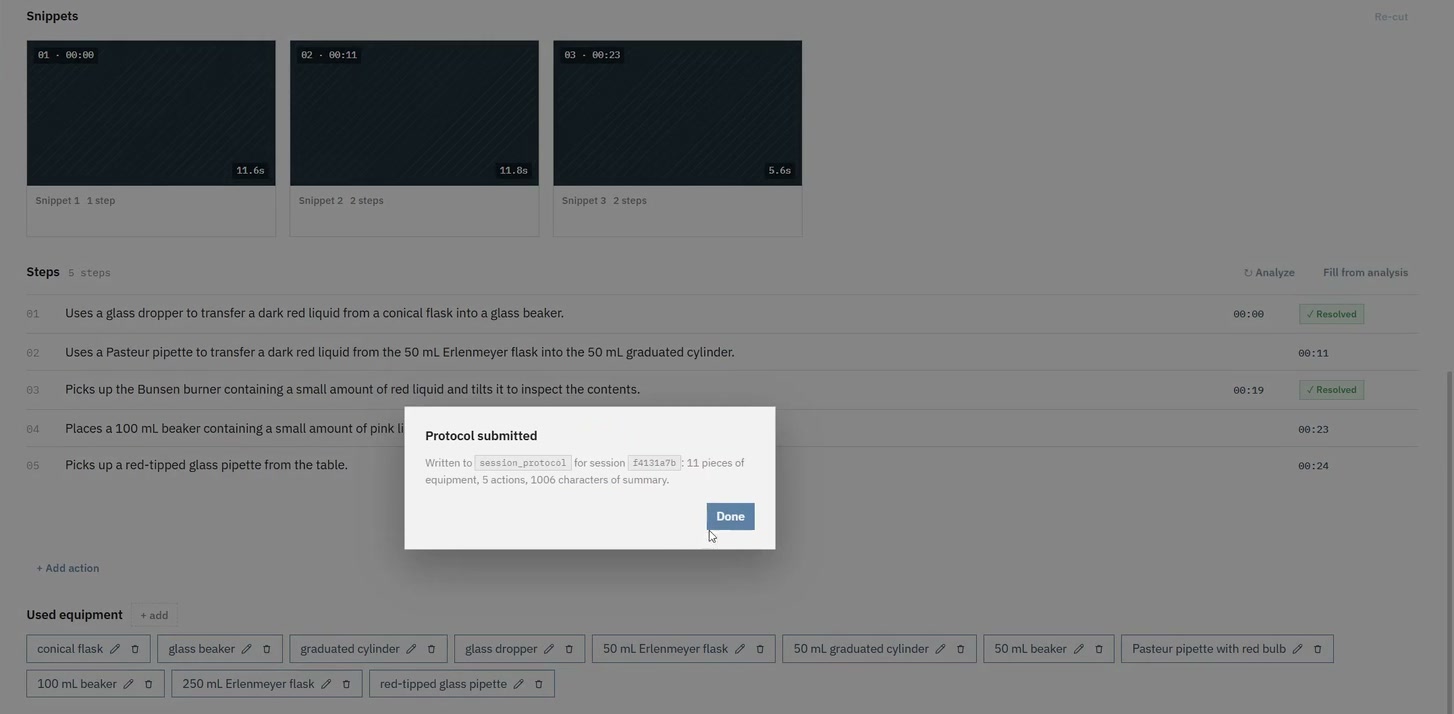
    NewSol confirmation dialog: protocol submitted, with the reviewed steps and used equipment behind it.

Security

Secure, compliant, connected

Privacy-first
Event-triggered capture only. No always-on surveillance, GDPR by design.
Flexible deployment
Cloud, on-premise or fully on the edge. The customer decides where data lives.
Built for compliance
GLP / GMP-ready structures, a full audit trail and role-based access.
Integrations
Exports into ELN and LIMS systems, plus an open API for in-house tooling.

Talk with your data

The protocols are kept as context so you can talk with your experiment, ask questions and get tips.

I want to find the acetic acid concentration of a vinegar sample by titrating it with 0.1 M NaOH. Which steps should I plan?

That is a weak acid against a strong base, so the equivalence point is slightly basic and phenolphthalein is the right indicator. I would plan it like this:

  1. Standardize the NaOH against potassium hydrogen phthalate. It takes up water and CO2 from the air, so its nominal concentration drifts.
  2. Dilute the vinegar 1:10 with deionized water in a volumetric flask, so the titre lands in a readable range.
  3. Pipette 25.00 mL of the dilution into a conical flask and add 2 to 3 drops of phenolphthalein.
  4. Rinse the burette with the NaOH, fill it, clear the air from the tip and note the start reading.
  5. Titrate while swirling until a faint pink lasts for about 30 seconds, then note the end reading.
  6. Repeat until two titres agree within 0.10 mL and use their mean.

Then c(acid) = c(NaOH) × V(NaOH) ÷ V(sample), multiplied by 10 for the dilution.

NewSolnow

You may have left the NaOH bottle open.

You left the NaOH stock bottle open.

In the recording it stays uncapped after you fill the burette (snippet 2, 00:41). NaOH takes up CO2 and water from the air, so its concentration slowly drifts.

Close it now. If it stood open for long, standardize it again before the next run.

Illustration of the assistant, not a screenshot.